Why IDX alone won't rankyour real estate website
By Saad Ali · 20 October 2026 · 6 min read
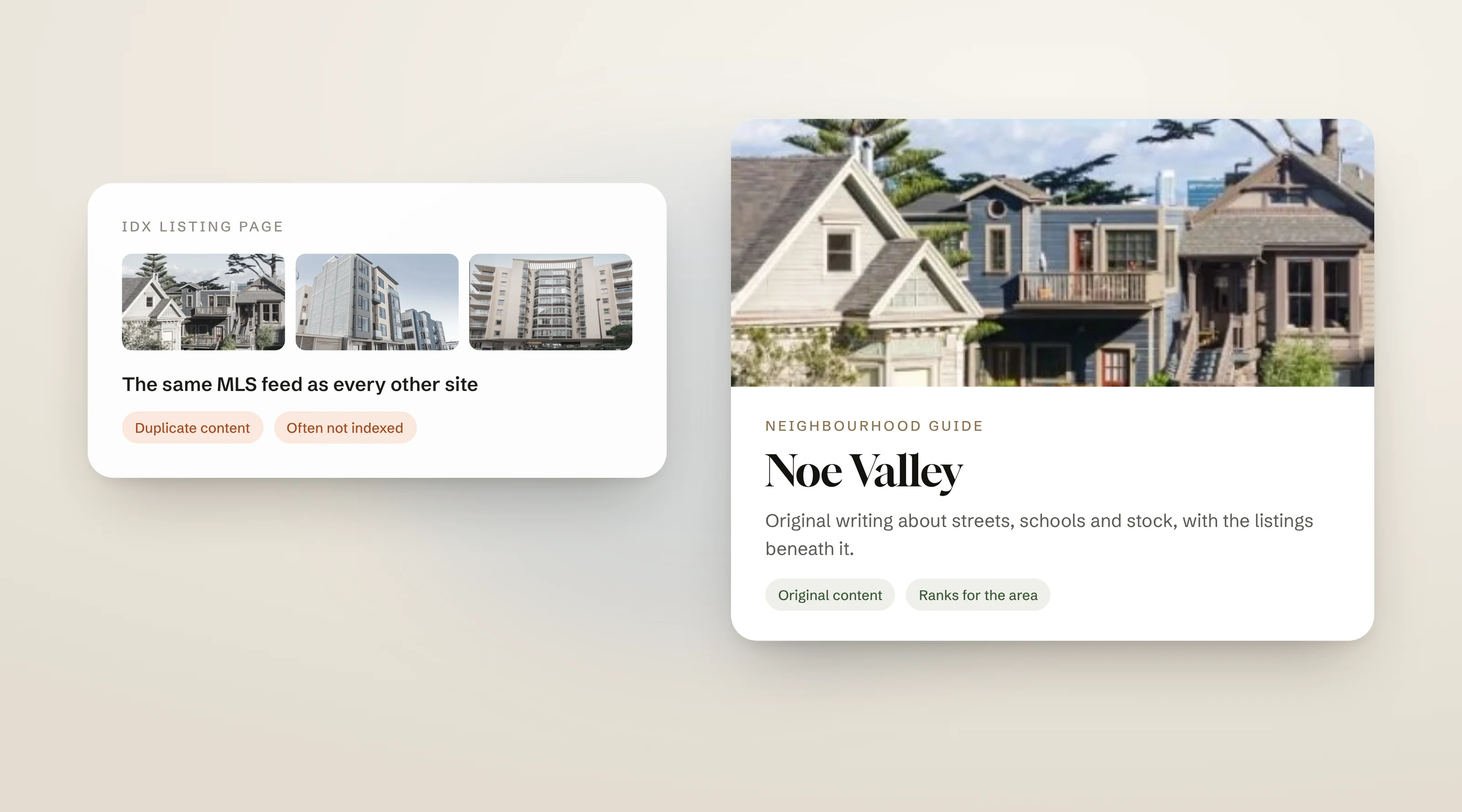
Thousands of agents show the same MLS listings. Here's what actually earns local search visibility, and how to structure a real estate site so Google has a reason to send sellers your way.
Most agents assume that once their site shows live MLS listings, search traffic will follow. It rarely does. Every brokerage, portal and competing agent in your market is displaying the same inventory, often from the same feed. To Google, that's thousands of near-identical pages. Nothing about them says you should rank.
Listings are inventory, not content
IDX is essential for buyers. They expect to search on your site, save homes and get alerts. But it's a utility, not a ranking strategy. The pages that win local search are the ones only you could have written: neighbourhood knowledge, market commentary, sold results and clear answers to the questions sellers ask before they pick up the phone.
What actually moves local rankings
- Neighbourhood pages with real substance: stock, pricing patterns, schools, lifestyle and your own perspective. Not a paragraph and a map.
- A properly managed Google Business Profile, with accurate categories, regular photos and a steady flow of genuine reviews.
- Technical basics done right: fast mobile load, clean URLs, one H1 per page, schema markup and a sitemap Google can crawl.
- Content that targets intent, not volume. 'Best agent to sell a villa in Cannes' converts. 'Real estate tips' doesn't.
- Internal links that connect listings to the area guides and services they belong to.
Structure the site around how sellers search
Sellers don't search for listings. They search for an agent, a valuation, or proof that someone knows their street. Build a page for each of those intents, and make sure every one ends with a clear next step: a valuation request, a call, or a market report.
IDX helps buyers find homes. Content helps sellers find you.
Where to start
Pick the five areas where you most want instructions. Write one excellent guide for each, update it quarterly with real market data, and link it from your homepage and listings. Pair that with a Google Business Profile you actually maintain. It isn't glamorous, but in most local markets it's enough to pull ahead within a few months.
If you'd like a second opinion on where your site stands today, request a private audit and we'll send you a short, honest review.
Request a private audit